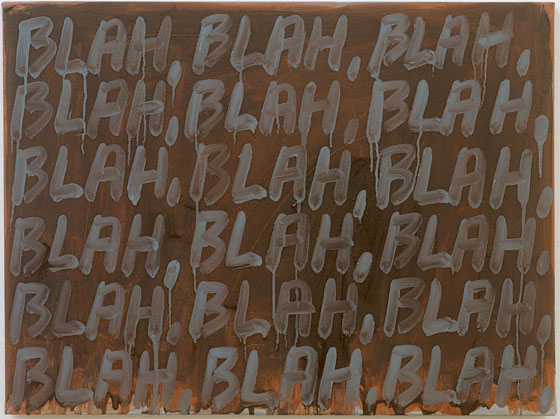
Vonnegut ends the novel with unique style, he encompasses the main themes of the book such as war and human irrationality in a sound. “Poo-tee-weet” or the onomatopoeia of the bird’s call. Is very important to note three major characteristics of this final word.
1. At the beginning of the novel Vonnegut employs the same word to introduce us to Billy’s world. “Everything is supposed to be very quiet after a massacre, and it
always is, except for the birds. And what do the birds say? All there is to say about a massacre, things like 'Poo-tee-weet?' ” (PDF) The ending of the novel seems to make sense after we understand the satiric prose of Vonnegut regarding war. Yes, birds are foreign to war, they are not involved with it directly, meaning that nothing much can describe the horrors of destruction. Words do not even fit the smallest fraction of what an armed conflict is like.
2. The repetition of this word at the introduction and ending of the book give the sense of cycle. Meaning that wars are constant that words will never describe the vast pain in them. There will always be “poo-tee-weet” nothing more or nothing less.
3. The use of this sound is like an ellipsis for the novel. It’s an Aposiopesis: “is a rhetorical device wherein a sentence is deliberately broken off and left unfinished, the ending to be supplied by the imagination, giving an impression of unwillingness or inability to continue. An example would be the threat "Get out, or else—!" This device often portrays its users as overcome with passion (fear, anger, excitement) or modesty.” (Wikipedia) “Poo-tee-weet” becomes the unfinished thought, an overwhelming idea that is too complex to portray.
With these characteristics of “poo-tee-weet” we can make a direct a direct connection with I
Felt a Funeral In My Brain by Emily Dickinson and
Anthem For The Doom Youth by Wilfred Owen. There are four main ideas or connections between
SlaughterHouse Five and these poems. These links are: war, humans and animal comparison (behavior), metafiction and the use of aposiopesis.
1. To show the war reference made in Owen’s poem we can recall:
What passing bells for these who die as cattle?
Only the monstrous anger of the guns.
Only the stuttering rifles' rapid rattle(Anthem for the doom Youth, lines 1-3)
Words such as guns and rifles and rapid rattle evoke war.
Slaugher House Five also refers to war in a more direct manner. The main character Billy had faced war itself, he had seen the destruction of Dresden and massive killing of people.
2. The irrationality and the fast fall of human bodies in a war is compared as well. Vonnegut’s most evident examples are: the “human zoo” description and the title of the novel. Owen’s compares animals and humans in the use of cattle and bells. Bells have two connotations in this context which are: bells of a church (dead person) and bells of cows or cattle. He also describes that this type of death is like the one of an animal, it does not involve any ceremony, the corpse fall in large quantities. These numerous deaths left by wars are similar to the ones in a slaughter house.
3. Metafiction is showed in
Slaughter House Five because they mention a book about war, making an indirect reference to the actual novel.
I Felt a Funeral In My Brain is a poem that talks about an inner thought, the sudden end of the poem makes reference to how this thought abruptly came to end.
4. The use of the aposiopesis is in fact the main prove of metafiction within the poem. This pause or unfinished idea is similar to the “Poo-tee-weet” used by Vonnegut in the novel. Both pieces employ an idea that is left hanging for a symbolical purpose. In the case of Slaughter House Five it means: words do are not accurate enough for war. Dickinson’s poem uses it to: emphasize how the poems course (thought) ends as the last word is said.