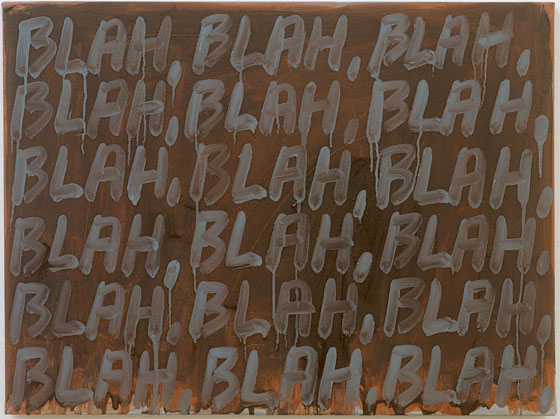
Vonnegut ends the novel with unique style, he encompasses the main themes of the book such as war and human irrationality in a sound. “Poo-tee-weet” or the onomatopoeia of the bird’s call. Is very important to note three major characteristics of this final word.
1. At the beginning of the novel Vonnegut employs the same word to introduce us to Billy’s world. “Everything is supposed to be very quiet after a massacre, and it
always is, except for the birds. And what do the birds say? All there is to say about a massacre, things like 'Poo-tee-weet?' ” (PDF) The ending of the novel seems to make sense after we understand the satiric prose of Vonnegut regarding war. Yes, birds are foreign to war, they are not involved with it directly, meaning that nothing much can describe the horrors of destruction. Words do not even fit the smallest fraction of what an armed conflict is like.
2. The repetition of this word at the introduction and ending of the book give the sense of cycle. Meaning that wars are constant that words will never describe the vast pain in them. There will always be “poo-tee-weet” nothing more or nothing less.
3. The use of this sound is like an ellipsis for the novel. It’s an Aposiopesis: “is a rhetorical device wherein a sentence is deliberately broken off and left unfinished, the ending to be supplied by the imagination, giving an impression of unwillingness or inability to continue. An example would be the threat "Get out, or else—!" This device often portrays its users as overcome with passion (fear, anger, excitement) or modesty.” (Wikipedia) “Poo-tee-weet” becomes the unfinished thought, an overwhelming idea that is too complex to portray.
With these characteristics of “poo-tee-weet” we can make a direct a direct connection with I Felt a Funeral In My Brain by Emily Dickinson and Anthem For The Doom Youth by Wilfred Owen. There are four main ideas or connections between SlaughterHouse Five and these poems. These links are: war, humans and animal comparison (behavior), metafiction and the use of aposiopesis.
1. To show the war reference made in Owen’s poem we can recall:
What passing bells for these who die as cattle?
Only the monstrous anger of the guns.
Only the stuttering rifles' rapid rattle(Anthem for the doom Youth, lines 1-3)
Words such as guns and rifles and rapid rattle evoke war. Slaugher House Five also refers to war in a more direct manner. The main character Billy had faced war itself, he had seen the destruction of Dresden and massive killing of people.
2. The irrationality and the fast fall of human bodies in a war is compared as well. Vonnegut’s most evident examples are: the “human zoo” description and the title of the novel. Owen’s compares animals and humans in the use of cattle and bells. Bells have two connotations in this context which are: bells of a church (dead person) and bells of cows or cattle. He also describes that this type of death is like the one of an animal, it does not involve any ceremony, the corpse fall in large quantities. These numerous deaths left by wars are similar to the ones in a slaughter house.
3. Metafiction is showed in Slaughter House Five because they mention a book about war, making an indirect reference to the actual novel. I Felt a Funeral In My Brain is a poem that talks about an inner thought, the sudden end of the poem makes reference to how this thought abruptly came to end.
4. The use of the aposiopesis is in fact the main prove of metafiction within the poem. This pause or unfinished idea is similar to the “Poo-tee-weet” used by Vonnegut in the novel. Both pieces employ an idea that is left hanging for a symbolical purpose. In the case of Slaughter House Five it means: words do are not accurate enough for war. Dickinson’s poem uses it to: emphasize how the poems course (thought) ends as the last word is said.
viernes, 18 de septiembre de 2009

"Atrocity and its splendor"

War can be seen as irrational ideal or the delight of some people. Do not judge me before I explain myself. Yes, the conservative reader stop now, do not continue reading this if you are overwhelmed with different ideas from yours. Personally I do not feel pleasure from conflicts, deaths and killing. However it seems that other people have acquired a desire for destruction and death. I do not see this as “weird”, it is very logical since destroying is easier than creating. A superficial example of this can be seen in the construction of a card castle. Every card has to be set up carefully, it usually takes longer than the lasting of the castle itself. It is obvious that watching the fall of the castle is not enjoyable. However the collapse of the castle seems to have a greater impact because it occurred in a very fast and sudden manner. Details such as: “made Billy get out of the wagon and come look at the horses. When Billy saw his means of transportation, he burst into tears. He hadn’t cried about anything else in the war.”(PDF) This shows the audience of Slaughterhouse five that Billy has cried for the smallest or less impacting detail of war. Considering that the slaughter of animals is minimal to the one of human lives in war. The effect of Destruction in any extent is probably going to last longer. This can be an indirect cause of wanting to kill and destroy, as I said previously this “seems” to be felt by some people.
"A Bomb type Catharsis"
Billy is able to feel a bomb-type catharsis in chapter eight, he undergoes a purge of restrained feelings. This experience varies from the time travelling sort of idea the novel emphasizes constantly. Usually Billy journeys back in time to realize and show his emotions. In this case it is different, Billy remains in the present and is able to recall the past without time travelling. While listening to the “Febs” he remembers the facial expression of the german soldiers. It is important to note how vary distant things (four men singing and german soldiers) can be related and compared when one has an everlasting shock. We can recall that he, “Had supposed for years that he had no secrets from himself. Here was proof that he had a great big secret somewhere inside, and he could not image what it was.”(PDF) He always knew his emotions were reflected in the past, in the war. In this case “he did not travel in time to the experience. He remembered it shimmeringly.”(PDF) It was the crucial twist in Billy’s character, reflecting another facet of his personality. This inner cleansing is very abrupt, similar to the bombing of a city.
viernes, 11 de septiembre de 2009
"Leave Billy alone, Billy!"
Vonnegut’s character, Billy, exists through his personality, which is divided in the actual and the fictitious Billy. In chapter five we immediately find ourselves with Billy the pilgrim, or person. The one that lives and does constant actions in a reality that seems reasonable to the audience. “There is no beginning, no middle, no end, no suspense, no moral, no causes, no effects.” (PDF) As mentioned in previous chapters, Billy is able to learn teachings in the Trafalmadorain abductions.
Time travelling is a major characteristic that Billy has, a very unique feature of the book. Billy fast-forward’s and returns to the past continuously, following non atemporal sequence. The present in the novel does not exist, present is brisk and it can be lived while being at the past or future. It is subjected to time and space to determine if the present really exists. He is a character that is undergoing constant change, has to explore his inner thoughts to find himself.
“What we love in our books are the depths of many marvelous moments seen all at one time.”(PDF) This type of quotation illustrates Vonnegut or Billy, the fictional character. It is like having a puppet show, the thoughts are left aside for the audience and the master. While the actions of the puppet (being controlled by the master) are seen but cannot have deeper meaning without the notion of ideas or values. In the novel Billy is in constant struggle or division, he has misplaced thoughts at the wrong settings. This is caused because there are two characters: Billy pilgrim and Billy the legacy. And somewhere in there, the boy's mother went out and told the receptionist that Billy was evidently going crazy. Billy was taken home. His daughter asked him again, 'Father, Father, Father-what are we going to do with you?'(PDF)
Time travelling is a major characteristic that Billy has, a very unique feature of the book. Billy fast-forward’s and returns to the past continuously, following non atemporal sequence. The present in the novel does not exist, present is brisk and it can be lived while being at the past or future. It is subjected to time and space to determine if the present really exists. He is a character that is undergoing constant change, has to explore his inner thoughts to find himself.
“What we love in our books are the depths of many marvelous moments seen all at one time.”(PDF) This type of quotation illustrates Vonnegut or Billy, the fictional character. It is like having a puppet show, the thoughts are left aside for the audience and the master. While the actions of the puppet (being controlled by the master) are seen but cannot have deeper meaning without the notion of ideas or values. In the novel Billy is in constant struggle or division, he has misplaced thoughts at the wrong settings. This is caused because there are two characters: Billy pilgrim and Billy the legacy. And somewhere in there, the boy's mother went out and told the receptionist that Billy was evidently going crazy. Billy was taken home. His daughter asked him again, 'Father, Father, Father-what are we going to do with you?'(PDF)
jueves, 10 de septiembre de 2009
"The tale of an unstable life"
The argumentation to qualify Billy as a character with post traumatic stress or not is subjected to variables and subjectivity. War as a decisive factor throughout the novel, does affect Billy and his character. “Post traumatic stress disorder (PTSD) is an emotional illness that develops as a result of a terribly frightening, life-threatening, or otherwise highly unsafe experience.”(Medicine net) Not only war but shocking experiences of suffering are linked with direct effects in Billy. The Trafalmadorians play a huge role on Billy’s growth as a person. We can see the conversation Billy establishes with them, it is very unique. “There is no beginning, no middle, no end, no suspense, no moral, no causes, no effects.”(PDF) Vonnegut uses the Trafalmadorians as the “subconscious” knowledge behind the dark side of war. They usually predicate or teach Billy some moral lessons such as: death not seen as a misfortune or negative event. In other cases Vonnegut describes the death of characters in a solemn and to some extent, distressing incident. “After poor Edgar Derby, the high school teacher, was shot in Dresden later on, a doctor pronounced him dead and snapped his dogtag in two. So it goes.” (PDF) Roland Weary’s death happens in Germany while the war is still occurring, Billy is majorly affected by this events. To state that Billy does suffer from post traumatic stress we must consider the following:
1. Recurrent re-experiencing of the trauma (for example, troublesome memories, flashbacks that are usually caused by reminders of the traumatic events, recurring nightmares about the trauma and/or dissociative reliving of the trauma),
2. Avoidance to the point of having a phobia of places, people, and experiences that remind the sufferer of the trauma and a general numbing of emotional responsiveness, and
3.Chronic physical signs of hyperarousal, including sleep problems, trouble concentrating, irritability, anger, poor concentration, blackouts or difficulty remembering things, increased tendency and reaction to being startled, and hyper vigilance to threat.
Seeing the constant trips in time and his attitude towards life the audience has the “ rubric” or the criteria to qualify Billy as PTSD or not.
1. Recurrent re-experiencing of the trauma (for example, troublesome memories, flashbacks that are usually caused by reminders of the traumatic events, recurring nightmares about the trauma and/or dissociative reliving of the trauma),
2. Avoidance to the point of having a phobia of places, people, and experiences that remind the sufferer of the trauma and a general numbing of emotional responsiveness, and
3.Chronic physical signs of hyperarousal, including sleep problems, trouble concentrating, irritability, anger, poor concentration, blackouts or difficulty remembering things, increased tendency and reaction to being startled, and hyper vigilance to threat.
Seeing the constant trips in time and his attitude towards life the audience has the “ rubric” or the criteria to qualify Billy as PTSD or not.
miércoles, 9 de septiembre de 2009
"The beauty of bla bla bla"

I would like to write this blog entry about a quote that embraces the exquisiteness of language: “There was a tiny plume of smoke at infinity.” (PDF) You may wonder what is so captivating about this sentence. To be honest I don’t know how to explain it very well. One may say that classical quotations such as: “Here then, as I lay down the pen and proceed to seal up my confession, I bring the life of that unhappy Henry Jekyll to an end.” (Robert Louis Stevenson, Dr. Jekyll and Mr. Hyde), “Why am I to be pitied, you say? Yes! There's nothing to pity me for! I ought to be crucified, crucified on a cross, not pitied! Crucify me, oh judge, crucify me but pity me?" (Fyodor Dostoevsky, Crime and Punishment) or even “For never was a story of more woe -Than this of Juliet and her Romeo.”(William Shakespeare, Romeo and Juliet). Yes, it may be a sin to compare a quote of Vonnegut with these sentences that will never leave our mind. But I can argue that this quote is esthetically fascinating. I shall appeal for “literary tolerance” if you may name it this way. It may be too poetical for a novel of sci-fi, to emphasize details with such delicacy. In this situation, Vonnegut is able to merge a story of time travelling and constant action with the use of graceful words. I do not state that esthetics should eclipse the content or meaning of a text. In fact I think the opposite, the use of these sentences highlight the content of the piece.
“There was a tiny plume of smoke at infinity.”(PDF) has another form of beauty. It is minimalist, the greatness of the sentence relies on its simplicity. It is a phrase that appeals to motion, to imagination and irrationality. A “plume of smoke” is movement in a poetical and contemporaneous manner of describing ordinary things. “Infinity” as you know, is more of an irrational concept, one that has been discussed for “fair” amount of time. The combination of the ordinary or basic with abstract or intangible terms is minimalist. The use of this sentence is “to create the maximum effect.”(The free dictionary) To you my friends I leave nothing but, reflection upon the beauty of “a tiny plume of smoke at infinity.”
"Short lapses in an eternal fall”
Billy the pilgrim is a very complex character, he time travels within his memories. "He is in a constant state of stage fright, he says, because he never knows what part of his life he is going to have to act in next."(PDF) Rationally thinking, it is not very pleasant to transport yourself in time and space because you loose track of where you are. Billy’s memories are traumatizing, they have changed him. Death is a constant thought humans have in mind at some stages of their lives. In some cases it is hard to speak of it, but going back to the death of a beloved person is worst. Vonnegut continues the narration of Billy’s life. He describes in detail Billy’s actions and thoughts while time travelling. “Wind and cold and violent exercise had turned his face crimson. He didn't look like a soldier at all. He looked like a filthy flamingo.” (PDF) The complexity of Billy’s character was shaped by his unstable way of living. He could remember and live his past and future, something very unusual to most of us. So far Billy travels, remembers and lives in a Twilight Zone. “He was a funny-looking child who became a funny-looking youth-tall and weak, and shaped like a bottle of Coca-Cola.”(PDF) Billy the soldier, Billy the man, Billy the widower and “so it goes.”
lunes, 7 de septiembre de 2009
"A cynic may be pardoned for thinking that this is a dog's life."
“I had the Bell Telephone Company find him for me. They are
Wonderful that way. I have this, disease late at night sometimes, involving alcohol and the telephone. I get drunk, and I drive my wife away with a breath like mustard gas and roses. And then, speaking gravely and elegantly into the telephone, I ask the telephone operators to connect me with this friend or that one, from whom I have not heard in years.” (Slaughterhouse-Five pg 2) This quotation by Kurt Vonnecut is a combination of humor, cynicism and a contemporary spirit. It is charged with emotion and sincerity, it is a Bob Dylan type of thought. A man is a success if he gets up in the morning and gets to bed at night, and in between he does what he wants to do.” Bob Dylan It basically describes Kurt Vonnecut and his story (yet to be told), it is an attractive sentence to drive our attention towards the novel. Why modern? Why so straight forward? The answer I wanted to find of to these questions was not delayed. Narration, style and tone should be intercalated, attracting the reader relies on: the organic thoughts. This excerpt was not “forced” to exist in the novel. It relates the banality of his actions with the setting of this story. This association is clearly shown in the beginning of the novel, “All this happened, more or less. The war parts, anyway, are pretty much true. One guy I knew really was shot in Dresden for taking a teapot that wasn't his. Another guy I knew really did threaten to have his personal enemies killed by hired gunmen after the war. And so on. I've changed all the names.” (Slaughterhouse-five) Effectively Vonnecut provides some previous context to set the inauguration of the book. The themes to be said are “normal”and are distorted at some degree. Alcohol, wives, time, and a distant friend are subjects of modern literature and cinematography. The “Rippler effect” contains these same ingredients in a different story, however still has an impacting effect. I must finish my blog entry with a cynic tone or at least an attempt of what it sounds like. I would like to apologize to you my dear audience if I like cynics, or novels written with some effortless memories of cotidianity. Do not get me wrong, recalling Dresden is not effortless (as Vonnecut states). But memories of calling a friend while being drunk are not too complex either.
Wonderful that way. I have this, disease late at night sometimes, involving alcohol and the telephone. I get drunk, and I drive my wife away with a breath like mustard gas and roses. And then, speaking gravely and elegantly into the telephone, I ask the telephone operators to connect me with this friend or that one, from whom I have not heard in years.” (Slaughterhouse-Five pg 2) This quotation by Kurt Vonnecut is a combination of humor, cynicism and a contemporary spirit. It is charged with emotion and sincerity, it is a Bob Dylan type of thought. A man is a success if he gets up in the morning and gets to bed at night, and in between he does what he wants to do.” Bob Dylan It basically describes Kurt Vonnecut and his story (yet to be told), it is an attractive sentence to drive our attention towards the novel. Why modern? Why so straight forward? The answer I wanted to find of to these questions was not delayed. Narration, style and tone should be intercalated, attracting the reader relies on: the organic thoughts. This excerpt was not “forced” to exist in the novel. It relates the banality of his actions with the setting of this story. This association is clearly shown in the beginning of the novel, “All this happened, more or less. The war parts, anyway, are pretty much true. One guy I knew really was shot in Dresden for taking a teapot that wasn't his. Another guy I knew really did threaten to have his personal enemies killed by hired gunmen after the war. And so on. I've changed all the names.” (Slaughterhouse-five) Effectively Vonnecut provides some previous context to set the inauguration of the book. The themes to be said are “normal”and are distorted at some degree. Alcohol, wives, time, and a distant friend are subjects of modern literature and cinematography. The “Rippler effect” contains these same ingredients in a different story, however still has an impacting effect. I must finish my blog entry with a cynic tone or at least an attempt of what it sounds like. I would like to apologize to you my dear audience if I like cynics, or novels written with some effortless memories of cotidianity. Do not get me wrong, recalling Dresden is not effortless (as Vonnecut states). But memories of calling a friend while being drunk are not too complex either.
Suscribirse a:
Comentarios (Atom)